Wurtsmith Air Force Base, Michigan
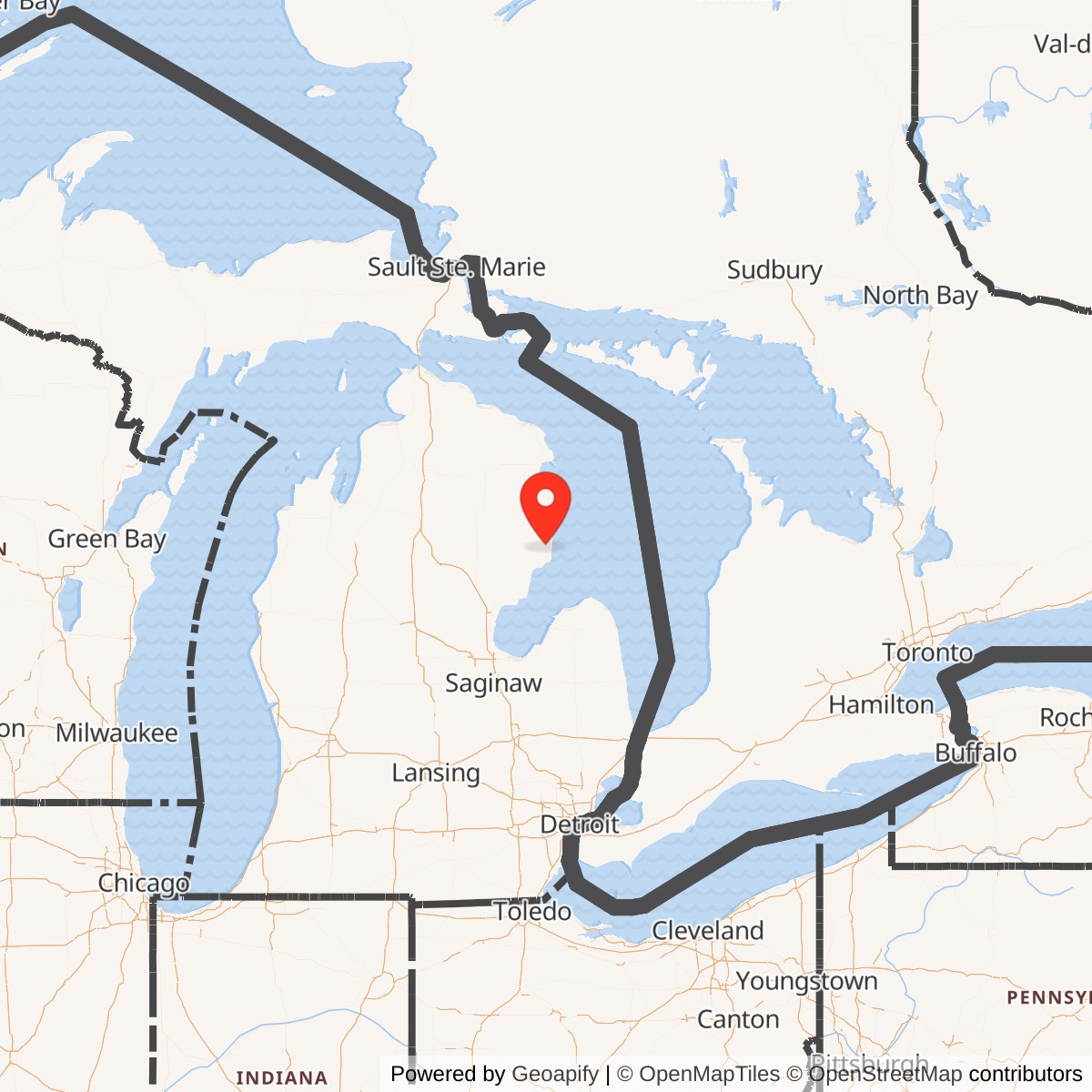
Longitude: -83.3947
Origin of current name: Named in honor of Maj Gen Paul Bernard Wurtsmith (1906-1946). General Wurtsmith commanded the Thirteenth Air Force in the Southwest Pacific during World War IT. Assigned to Headquarters SAC after World War Ii, General Wurtsmith died on 13 Sep 1946 near Asheville, NC, when his B-25 crashed on Cold Mountain.
Date current name was assigned to base: 15 Feb 1953
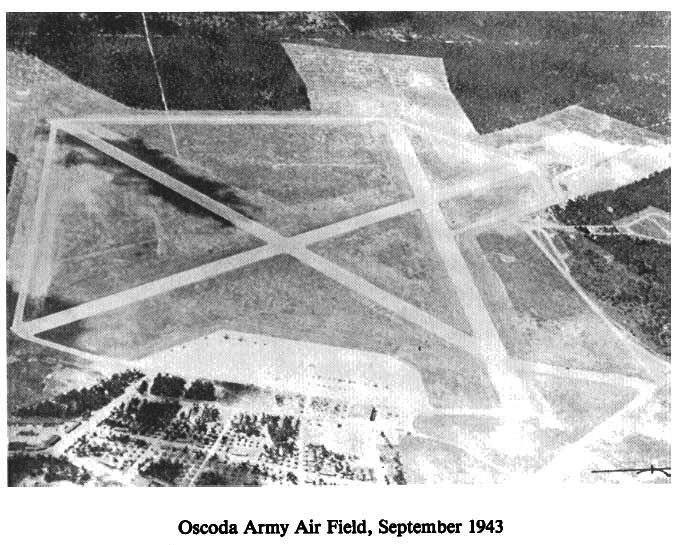
Previous Names: Camp Skeel, Nov 1931; Oscoda Army Air Field, Aug 1942; Oscoda Air Force Base, 24 Jun 1948
Date Established: 1924
Date Occupied: 10 Mar 1924
Construction Began: 1925-1926, first buildings (USA), Aug 1942 (AAF)
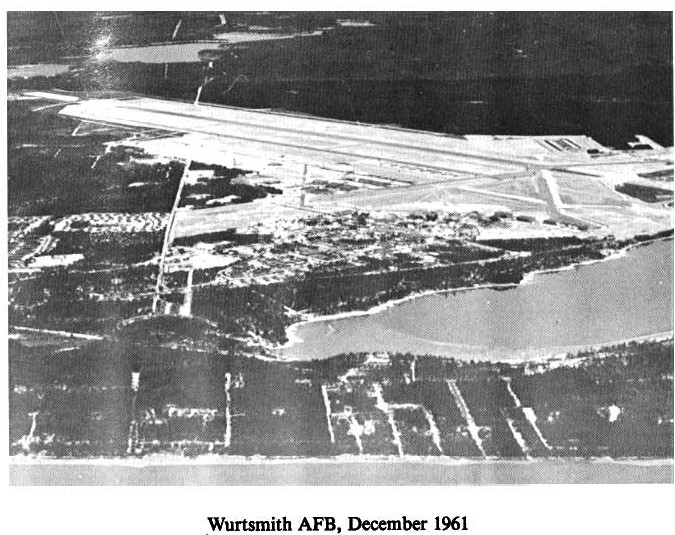
Changes in Capability: Used for winter maneuvers 1924 through 1944; after 1927 base also used for aerial gunnery practices by Selfridge AAFid, MI; three runways, connecting taxiways, and apron completed late 1942; concrete surfaces improved, runway lengthened to 11,800 feet 1959; facilities augmented for B-52 and KC-135 operations 1960; new control tower opened 20 Jul 1960; 50-bed hospital occupied late 1961; concrete surfaces improved 21 Jul 1960; Capehart housing project completed spring 1962; 300 relocatable housing units installed mid-1964; throughout 1960s and 1970s base maintained an operational capability for SAC bomber and tanker aircraft; AGM-69A SRAMs replaced AGM-28B Hound Dogs in 1974; 14 major construction projects begun in 1978 included ramp and runway rehabilitation, completed in the same year, and communication and navigation facilities completed during 1979; weapons system security improvement project completed May 1980.
Major Changes in Status: Auxiliary of Selfridge Fld, MI, mid-1924 to 1942; subbase of Alpena AAB, MI, c. 21 Sep 1942; subbase of Selfridge Fld, 1 Jan-11 Jul 1944; primary installation, 12 Jul 1944; inactivated, 31 Dec 1945; subbase of Selfridge Fld, 5 Apr 1945- 19 Feb 1947; activated as a primary installation, 20 Feb 1947.
Wurtsmith Air Force Base has been an integral part of the United States Air Force from the 1920's to June 30th 1993. The base came to be because of chance. If a banker had not taken Lt. Whitehead on a fishing trip there would not have been an Air Force Base in Oscoda Michigan. Over the tenure of the base it was home to an aerial gunnery range, a fighter-interceptor training base and later home to the 379th Bomb Wing as a member of the Strategic Air Command.
Over the 50 years of operation Wurtsmith Air Force Base had many different missions. The gunnery range was tasked with training pilots from Selfridge air base in the challenging maneuvers required to land a DeHavilland biplane on the frozen lake Van Etten for the young Army Air Corps. In the later years of World War II Wurtsmith Air Force Base was used as a fighter-interceptor training base and housed the 332d fighter group, which was part of the famous Tuskegee Airmen. In 1955 Wurtsmith Air Force Base became an official permanent post in the United States Air Force, which meant that many new services were implemented on base. On August 1st 1958 the 4026th Strategic Wing was formed at Wurtsmith Air Force Base. Its mission was to maintain half of the fleet on a 15 minute alert, meaning the plane could be in the air in 15 minutes, to reduce vulnerability to a Soviet preemptive missile strike. On May 9th 1961 the first B-52 landed in Wurtsmith Air Force Base signifying the re-designation to a Strategic Air Command Base. While the 379th Bomb Wing was stationed at Wurtsmith Air Force Base they were part of the Ready Alert Nuclear Strike Force. This meant that there was always at least three B-52s armed with nuclear bombs, ready to take off at a moment's notice. These planes would regularly fly missions from Wurtsmith Air Force Base during the cold war.
The 379th Bomb Wing moved to Wurtsmith Air Force Base in June of 19661. Assuming the equipment, personnel and aircraft of the 4026th Strategic wing as it was disbanded. The 379th Bomb Wing immediately continued the 4026th Strategic Wing operations and training. During the Pacific conflicts personnel and the KC-135 Stratotankers were deployed to forward bases in the Pacific to support land operations. However, the B-52H aircraft maintained nuclear alert at Wurtsmith Air Force Base. In 1977 the 379th Bomb Wing upgraded the B-52H fleet to B-52G aircraft.
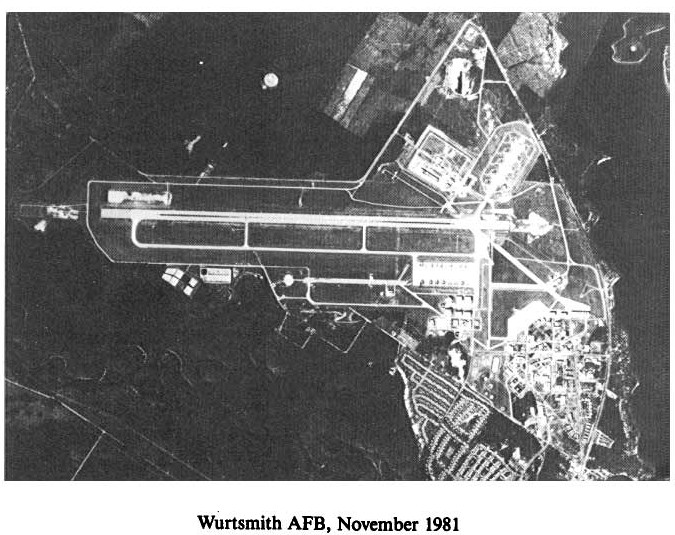
At this time Wurtsmith Air Force Base was still part of the Strategic Air Command's bomber fleet. Wurtsmith Air Force base was one of five northern tier bases in the Strategic Air Command's arsenal. These bases were responsible for a housing a Ready Alert Nuclear Strike Force. Wurtsmith Air Force Base was constructed with a runway layout specifically for this. As seen in the picture of the runways, there is a "Christmas tree" coming off of the beginning of the runway with a building next to it. This bunker compound housed the flight crews on ready alert, the three B-52 bombers ready to take off at a moment's notice, and the accompanying KC-135s ready to top off the B-52s after takeoff. These KC-135s were necessary because the B-52 could not take off with both a full load of ordnance and a full tank of gas.
When the Gulf War started in 1990, the 379th Bomber Wing sent B-52s as well as their accompanying KC-135s into the Middle East. The B-52s did not get to travel nearly as much as the KC-135s. In fact the only time B-52s would travel was for training missions, or actually delivering ordinance to its target. The KC-135s had many more opportunities to travel because they would fly in support of any craft capable of refueling in flight. This meant that they could be flying a mission supporting a fighter squadron in Iraq, then be redirected to refuel a bomber squadron over Saudi Arabia, then fly back to Spain to land. It was also possible for these missions to originate in the United States. For example a KC-135 could take off from Wurtsmith Air Force Base, fly across the Pacific Ocean, land in Spain, have the flight crew be relieved by a fresh crew, fly into theater, complete the mission and return to Spain, where the original crew would be rested and ready to fly the KC-135 back to Wurtsmith Air Force Base. During the Gulf War these planes were run practically 24/7, landing only to swap flight crews to meet the flight crew rest requirements. Mr. Norton remarked that they were flying the wings off of the planes.
The usefulness and mission type of the KC-135 in maintaining air superiority, as well as supporting missions originating in the United States meant that they would have longer assignments, as well as much more fluid assignments than other types of squadrons. A bomber squadron for example would be sent out to destroy a target and return to its home base within a week. The KC-135s would finish one mission and there would be another one waiting for them as soon as they were available. As long as these assignments were under 180 days they were considered Temporary Duty Assignments. As soon as an assignment went over 180 days it was considered a permanent change in duty station. This would result in a large amount of paperwork and extra expenses for the Air Force. Because of this KC-135 squadrons would routinely fly 175 day assignments and return to their home base. As soon as the wheels touched down the clock would be reset and they could be sent out on another assignment. This resulted in KC-135 squadrons spending a greater amount of time on temporary duty assignments than other squadrons from Wurtsmith Air Force Base.
As new technologies and mission goals evolved with time the need for the Strategic Air Command's need for the northern tier became obsolete. On June 30th, 1993 the 379th Bomb Wing was disbanded and Wurtsmith Air Force Base was closed. In recent years groundwater contamination has be linked to jet fuel, cleaning agents, and fire suppression agents used at Wurtsmith Air Force Base. There is an ongoing project to decontaminate the area.