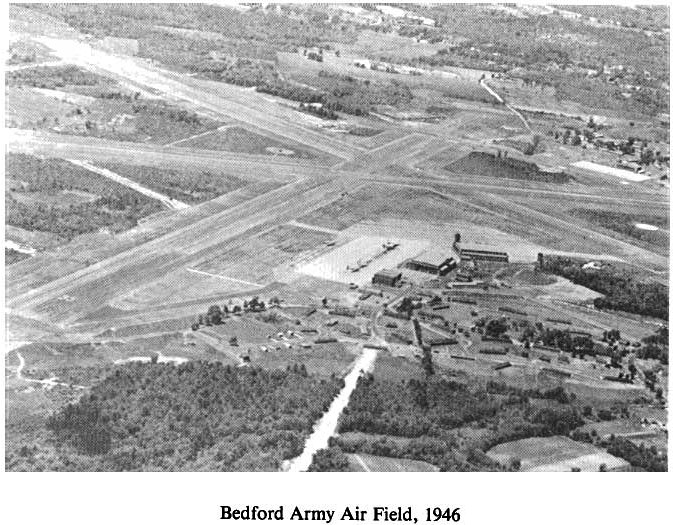
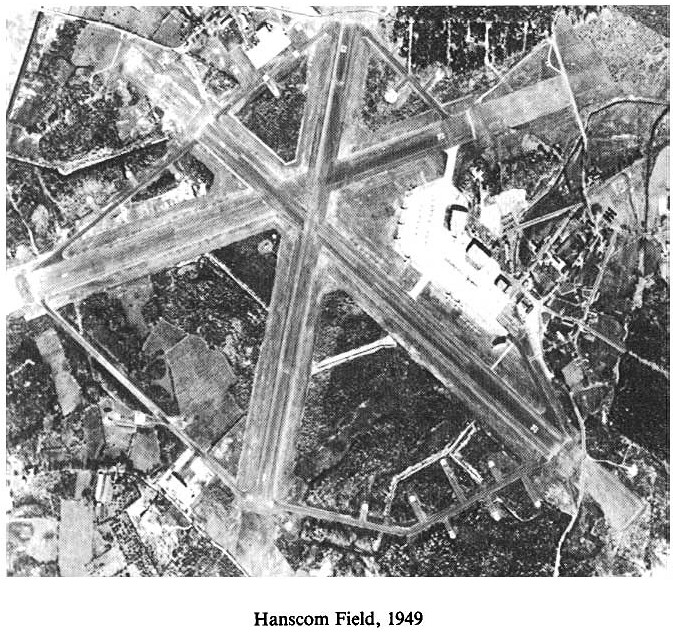
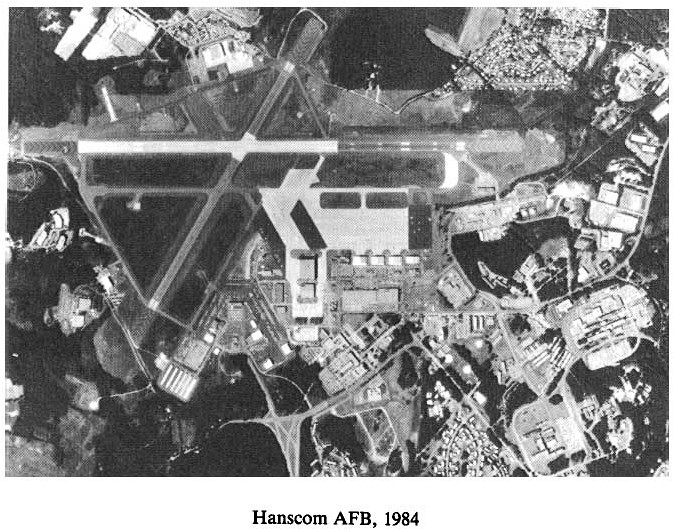
Hanscom Air Force Base, Massachusetts
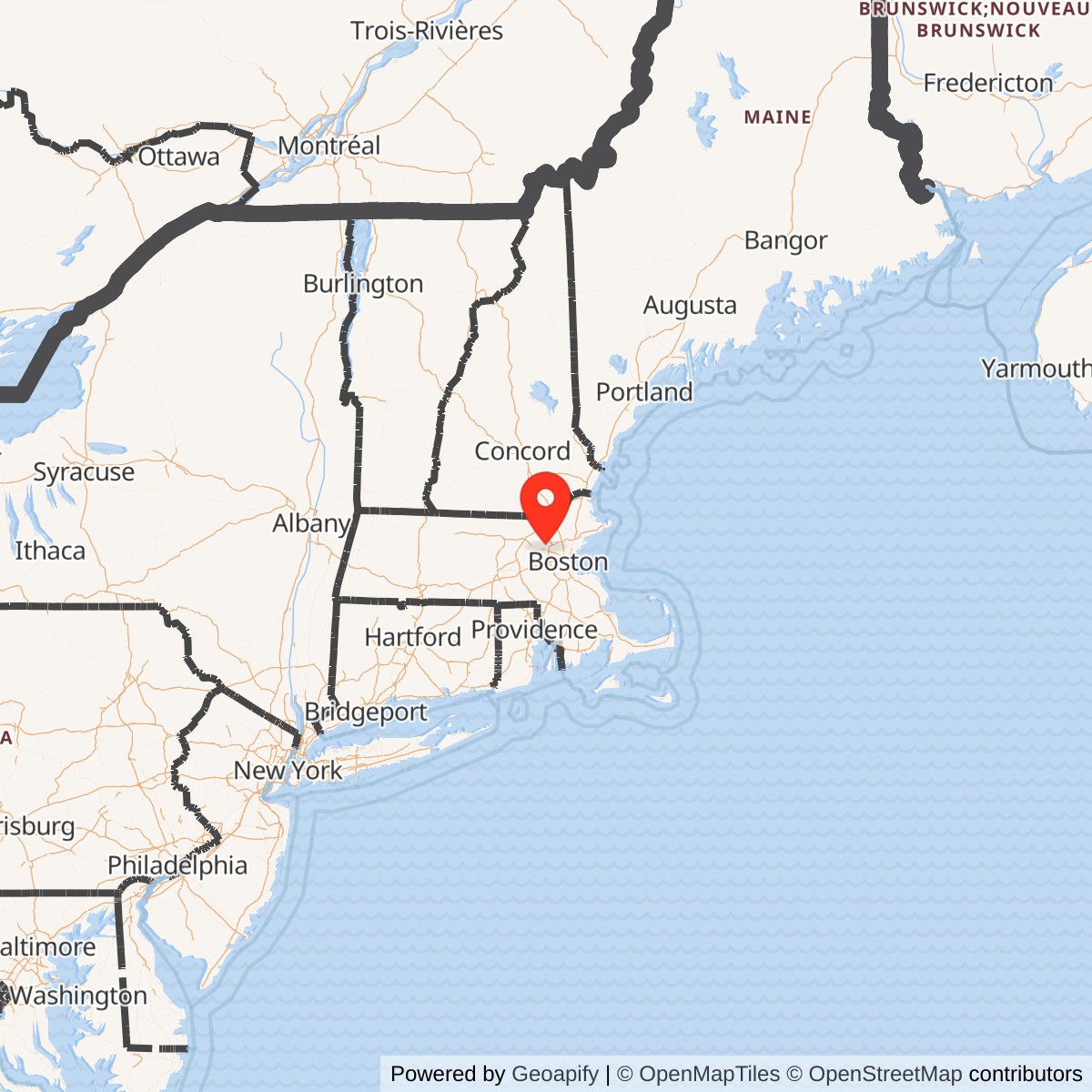
Longitude: -71.2890
Origin of current name: Named in honor of Laurence Gerard Hanscom (1906-1941). A Boston pilot and newspaper reporter, Hanscom was active in early aviation, founding the Massachusetts Civil Air Reserve. He worked for the Worcester Gazette and Telegraph when killed in the crash of his Fleet biplane on 9 Feb 1941.
Date current name was assigned to base: 18 Jan 1977
Previous Names: Laurence G. Hanscom Field, Boston Auxiliary Airport at Bedford, 26 Jun 1941; Bedford Municipal Airport, 29 Jun 1942; Bedford Army Air Field, 8 Apr 1943; Hanscom Airport, 15 Oct 1947; Bedford Air Field, Mar 1948; Hanscom Field, Jun 1948; Laurence G. Hanscom Field, 24 Dec 1952; Laurence G. Hanscom Air Force Base, 22 Jun 1974.
Date Established: 22 Aug 1942
Date Occupied: 2 Jul 1942
Construction Began: 23 Jun 1941
Changes in Capability: Facilities completed for P-47s Feb 1943; base became a test facility for radar and radio research by the Massachusetts Institute of Technology and Harvard University Oct-Dec 1944; facilities for geophysics, electronic, nuclear, and chemistry research completed, and base became part of the AF Cambridge Research Center (AFCRC) 1952-1954; by 1955 AFCRC relocated at the base; Hanscom became principal USAF basic electronic research site and an important installation for development of electronic systems by 1960; Electronic Systems Division headquarters building occupied in Sep 1963; new systems design laboratory dedicated 3 Dec 1963; 200-family housing project completed Nov 1965; special computation laboratory completed Mar 1971; all flying activity terminated 1 Sep 1973; provided support for Electronic Systems Division, AFSC, 1973 to present.
Major Changes in Status: Subbase of Westover Fld, MA, c. 1 Jul-31 Sep 1942; subbase of Grenier Fld, NH, 1 Oct 1942-c. 2 Jun 1943; subbase of Bradley Fld, CT, 3 Jun-5 Jul 1943; subbase of Grenier Fld, NH, 5 Jul-31 Dec 1943; subbase of Westover Fld, MA, 1 Jan-14 Oct 1944; on standby basis, 1 Jan-10 Apr 1944; discontinued, 12 Aug 1945; disposed, 8 Mar 1946; transferred to State of MA, 21 Aug 1946; leased from Commonwealth of MA to US Government, 1 Jul 1947; designated field a civil designation, inasmuch as flying facilities are property of Commonwealth of MA (USAF not having exclusive use), 24 Dec 1952.
Hanscom Air Force Base, Massachusetts, began its existence while the United States was considering its entry into the World War II. In May 1941, the Massachusetts Legislature authorized the purchase of a large tract of farmland bordering the towns of Bedford, Lincoln, Concord and Lexington, Mass., for a Boston Auxiliary Airport. Funds to build the new airport were contributed by the federal government, which had appropriated $40 million to build 250 new civil airports across the United States that could serve for future national defense.
In mid-1942, the Commonwealth of Massachusetts leased the Bedford airport to the War Department for use by the Army Air Forces. Fighter squadrons trained there in 1942 through 1943. The 85th Fighter Squadron and the 318th Fighter Squadron, who trained at Bedford on the Curtiss P-40 Warhawk, went on to combat in North Africa and Europe.
In February 1943, the airport was renamed Laurence G. Hanscom Field in honor of a Massachusetts-born pilot and aviation enthusiast who had been a reporter for the Worcester Telegram-Gazette. Hanscom had died in February 1941, in an aircraft accident in Saugus, Mass., while he was lobbying vigorously at the State House for the establishment of the airport at Bedford.
Later in the war, the Bedford Army Air Field served as a site for testing new radar sets developed by MIT's Radiation Laboratory. It was this secondary wartime activity at Hanscom that gave rise to the base's postwar role.
Since 1945, Hanscom has emerged as the Air Force's center for the development and acquisition of electronic systems. The base has also played a significant role in the creation of a national high-technology area around Route 128.
World War II established the key military importance of radar. In 1945, when Massachusetts Institute of Technology and Harvard wartime laboratories were dissolved, the Army Air Forces aimed to continue some of their programs in radar, radio and electronic research. It recruited scientists and engineers from the laboratories, and its new Air Force Cambridge Research Laboratories (AFCRL) took over MIT's test site at Hanscom Field.
By 1950, the Air Force was working closely with MIT to develop a new air defense system for the continental United States. Expanding its facilities at Hanscom Field was a step to accomplishing this massive project. After some negotiation, the Commonwealth of Massachusetts agreed in May 1952 to cede land on one side of the airport to the federal government and to give a 25-year renewable lease on the airfield itself.
The first buildings for the new MIT Lincoln Laboratory at Hanscom were completed in 1952, and the Air Force's electronic and geophysics laboratories in Cambridge started to migrate out to its own new facilities in Bedford in 1954. The airfield's runways were reconfigured and expanded in 1953, and new hangars, headquarters and facilities were built. To provide test and evaluation for Lincoln Lab's new "Cape Cod" experimental air defense system, Hanscom's 6520th Test Support Wing logged thousands of hours of flying time.
The Semi-Automatic Ground Environment (SAGE) system, completed in the early 1960s, revolutionized air defense and also contributed significantly to advances in air traffic control systems. As the SAGE system matured, the Air Force pursued the development of a number of advanced command, control and communications systems.
In 1961, the Electronic Systems Division (ESD) was established at Hanscom Field in order to consolidate the management of the Air Force's electronic systems under one agency. Since that time, the Electronics Systems Division (redesignated the Electronic Systems Center in 1992) was the host organization on the base.
While Hanscom's role in system acquisition flourished after the 1950s, its operational mission gradually diminished. As of September 1973, all regular military flying operations at Hanscom ceased. The following year the Air Force terminated its lease of the airfield portion of Hanscom Field, which reverted to state control, but retained the right to use the field. The Air Force redesignated its own acreage surrounding the field as the Laurence G. Hanscom Air Force Base. In 1977 the name was shortened to the present Hanscom Air Force Base.
The base saw a second wave of construction during the 1980s. The Electronic Systems Division put up four new systems management engineering facilities (the O'Neill, Brown, Shiely and Bond Buildings). For base personnel, there were new service facilities--medical, youth and family support centers--as well as additional housing and a temporary lodging facility.
Since July 1992, Hanscom's primary mission has been part of the Air Force Materiel Command. In 1994 the Air Force designated ESC as the Air Force Center of Excellence for Command, Control, Communications, Computers and Intelligence (C4I).
The Standard Systems Group at Gunter Annex, Maxwell AFB, Ala.; the 38th Engineering Installation Wing at Tinker AFB, Okla.; the Materiel Systems Group at Wright-Patterson AFB, Ohio; and lastly the Cryptologic Systems Group at Kelly AFB, Texas; were all attached to ESC between 1993 and 1996 in order to consolidate related functions in AFMC under the Center, and to support its expanded mission. Subsequent reorganizations changed the groupings, but all the above organizations (though renamed) except the 38th EIW remained under Hanscom's reporting chain.
In 2004, ESC was reorganized into a named wing, group and squadron unit, to better reflect the organization of the Air Force as a whole. In 2006, the wings, groups and squadrons were given numbered designations. In 2010, ESC reverted back to an organization of program offices and the 38th Engineering Installation Wing (by then a group) was re-assigned. New Air Force standards caused the 66th Air Base Wing, because of its size, to be redesignated the 66th Air Base Group.
In June 2011, the Air Force Research Laboratory Sensors Directorate moved from Hanscom to Wright-Patterson AFB, Ohio, and the Space Vehicles Directorate moved to Kirtland Air Force Base, N.M., closing more than 60 years of laboratory presence on Hanscom.
The Electronic Systems Center as an organization was realigned in July 2012, and became a part of the newly-created Air Force Life Cycle Management Center headquartered at Wright-Patterson AFB in Ohio.
Today, the mission program offices at Hanscom AFB remain an integral part of the evolving electronics technology community in the Boston area, consisting of educational institutions, private industry and military research and development installations. Today, the base continues its leadership role in the development and acquisition of Air Force command and control systems.
From A brief history of Hanscom Air Force Base